Community Entry, Still Going

Things are still going well during my time of Community Entry. There are a lot of different things to

adjust to even from Pre-Service Training. You go from having every second of your day planned to nothing at all. It is nice having more control over what you do, but it is a big adjustment. Especially because if frequent experiences with “Zam Time”.

Zam Time is what us volunteers call scheduling/timing (just time in general) in Zambia. This is definitely a cultural divide. Coming to Zambia I didn’t think I would care about this part of the culture because I’m pretty relaxed about time and can never seem to keep it. Surprisingly, it has bugged me. You set a meeting and people might show up an hour or two late for it, or you plan something out and it get canceled. Buses or drivers don’t show up on time to take you somewhere important. The Zambians don’t seem to mind, they just wait patiently. I think because so many things are done by hand, everything just takes so much longer to do, and time is not kept. Also, many people don’t have clocks. Some have phones, but they are the old brick phones where you have to go in and set the time yourself. People here often use the sun to help tell the time. My host father will look up in the sky point to the sun and be like “it’s 11:37”. I’m not sure why he always picks such an exact time … but he’s usually off.

A couple weeks ago I had a meeting with people on the schools committee, the meeting was supposed to be at 10. At 1 the meeting finally started with only half the committee present. The Zambians were totally unfazed, but I was hangry and tired and it took all my composure not to lose it. I don’t want to look like the crazy American lady just a couple months into my service, I’ll save that for later.

During training, we went to a museum where they had a Zambian professor talk about its history and culture. She described how Zambians view time like this: Zambia lives in a culture where time is seen as fluid. Because time is seen this way time can never be lost, there will always be more time. In America we live in a culture where time is fixed. Time can be seen as lost so it has more of a value put on it (the whole time is money thing). I thought this was an interesting way of describing the culture differences. It would explain why the Zambians are so patient when it comes to other people being late. I could probably work on that myself. I do think it’s a really pretty way of thinking about time.

I think one of the big contributors to Zam Time is that the Zambian culture is very polite and hospitable. Greetings are very important to Zambians. Walking along a path if you see someone you greet them, usually in several different ways. “Muli shani” is the standard “how are you”, then you can go further into greetings. How is your morning: mwashibuka shani. How is work: mwabomba shani. You can turn just about any action into a greeting. When biking you have more of a pass and can just do a quick hello. When you’re walking you are expected to stop, and talk, especially if you know the person.

Zambia has 72 different chiefdoms each with its own dialects. So across the country how you greet people is slightly different. Where I am is the Lala dialect which is part of the Bemba language so we greet people basically the same as the Bemba’s.

In Lala land when saying greetings males usually put their right hand over their heart and give a nod. Women usually do a soft clap (palms facing parallel to the ground) and do a little bend/curtesy. These are not always excluded to male/females often times people do both followed by a handshake. To show respect while you shake someone’s hand, you hold the elbow and give a little knee bend.

Another show of Zambian hospitality is if your stop by someone’s house they usually always offer you something to eat or to take home with you. The other week after I was helping a farming with site selection for fish ponds he gave me 4 heads of cabbage and about 20 “orange” (they taste more like lemons in my village, very sour). I always share these with my host father out of respect for helping with translation and it’s just way to much to eat. If you’re offered something to eat, you always have to say yes. Hints why people always being late. There has been times when I say “I should be going now” only to get protest saying I have to eat with them.

I always find this very heartwarming. People have to work so hard to grow/cook their food and often times they don’t have enough, yet they still share with me.
Village Life 

My permanent site is in a village called Nglande in the Chitambo District of Central Province. This area has lots of hills (some call them mountains but being from the Pacific Northwest they are hills to me), valleys and is a forested area. Looking out my front door I see lots of trees and the top of the next “mountain” which the sun sets behind every night. Central also will randomly have large rocks protruding from the ground which only adds to its appeal. People in my village speak a mix of Bemba and Lala, but so many people in the area speak English (it is the countries national language) that I unfortunately am barely using my Bemba. 
There are some really beautiful views in my area. From one of my host fathers farms you can see the forest canopy of the valley below and the rolling hills all around. There are even a couple places that have the quintessential “African” landscape with the thick tall grass and trees sprinkled about. I think my site is definitely worth a visit from the States! 

My site is very spread out. My house is about 10 kilometers from the road/tarmac. Unlike other villages there isn’t any true village center. There is no market or shops. So I have to pack in my food when I come from the BOMA. Which isn’t horrible because my host father send the kids to the tarmac to help me or sends them with my bike (another reason why my host family is great).

Besides fish farming and continuing the bee keeping project the last volunteer had, one of my main projects I’ll work on for the next two years is trying to help my Community School become an actual school recognized by the government. Community Schools have volunteers from the village teach the classes and not government teachers. They also don’t receive much financial help from the government. 

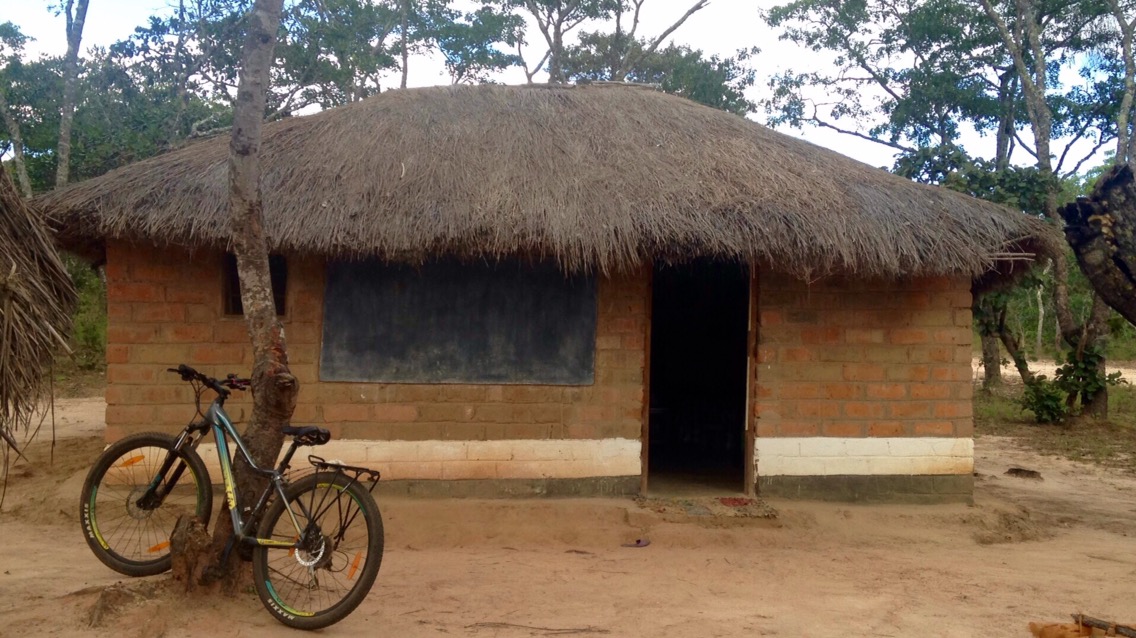
Right now the Community School (grades 1-4) is in disarray. The school is a mud brick rectangle shape building with two classrooms and a small office/storage area in the middle. Each room is separate from one another and has its own door that you enter from the outside, no hallway. The windows are basically just square holes in the classroom walls. There is no glass or bars covering the window. There is no door for the classrooms either just a doorway. The office had a door and a lock (a chain that goes through the doorframe and the door that you have separate lock for) which I guess is a newer addition to the school. Unfortunately only one of the two classrooms is really useable because the roof of the second classroom is falling down and there is no chockboard. So there is a lot of work to be done on the physical building part. There is also a ton of work to be done on the teaching side. The school has almost no resources only amount of school limited books that were provided by the government. The teachers have no lesson plans or ways to keep records. This will be the first thing I focus on. 

Fixing the Community School is an vital project because the closest government school is a 1.5-2 hour walk away. As you can imagine having the younger grades do this walk everyday through a forested area is a scary thought. Some of my host siblings that are in the upper grades do this walk. Recently they have been doing the walk barefoot because my host father just bought them shoes and they don’t want to get them dirty. Which I find cute and incredibly sad at the same time. It really makes me disappointed in recent cuts to humanity programs like Let Girls Learn and the Peace Corps that can help with problems like this (especially when Peace Corps members are volunteers). 

The school system in Zambia is a little different than ours. First they don’t have a big summer break like in the US, they go to school for three months then have a one month break, plus national holidays off. So they have the month of April, August and December off. Which I think is a great school schedule! 

In Zambia grades 1-7 are free from the government but grades 8-12 the parents have to pay for. This can be very hard for the parents to do, so often times you’ll find people who don’t have higher then 7th grade education. The cost of the school varies in my area, it’s anywhere from 650-1050 kwatcha (Zambians currency) that is about $65-100. Plus the school several hours away so you have to pay room and board as well. Unfortunately this is impossible for many parents to pay. What happens is children go to school when their parents can afford it. So, there might be several year break between grades 8 and 9, for example. One of my host brothers is almost 22 and in 11th grade. He is a very dedicated student, which I am really impressed by. There probably is a lot of pressure to do well because such a large portion of your families income is devoted to your schooling and the fact that many families can only afford to send one child at a time. 

I am hoping that all of this feeds my passion to help the Community School. Also, that it is a project that I will be able to accomplish in two years time. 

The Start of Community Entry

I have moved into my permanent community and I’m over a month into what Peace Corps calls Community Entry. Community Entry last the first three months at a volunteers permanent site. During this time you are not obligated to work on any projects, you are just supposed to start getting adjusted to life on your own. This time is used to get to know your new community and host family. Get your house settled and try and build relationships that will help you the rest of your service. Also, during this time you are not allowed to have any out of country visitors or leave your district (county) unless you are going to your BOMA for food/resources.
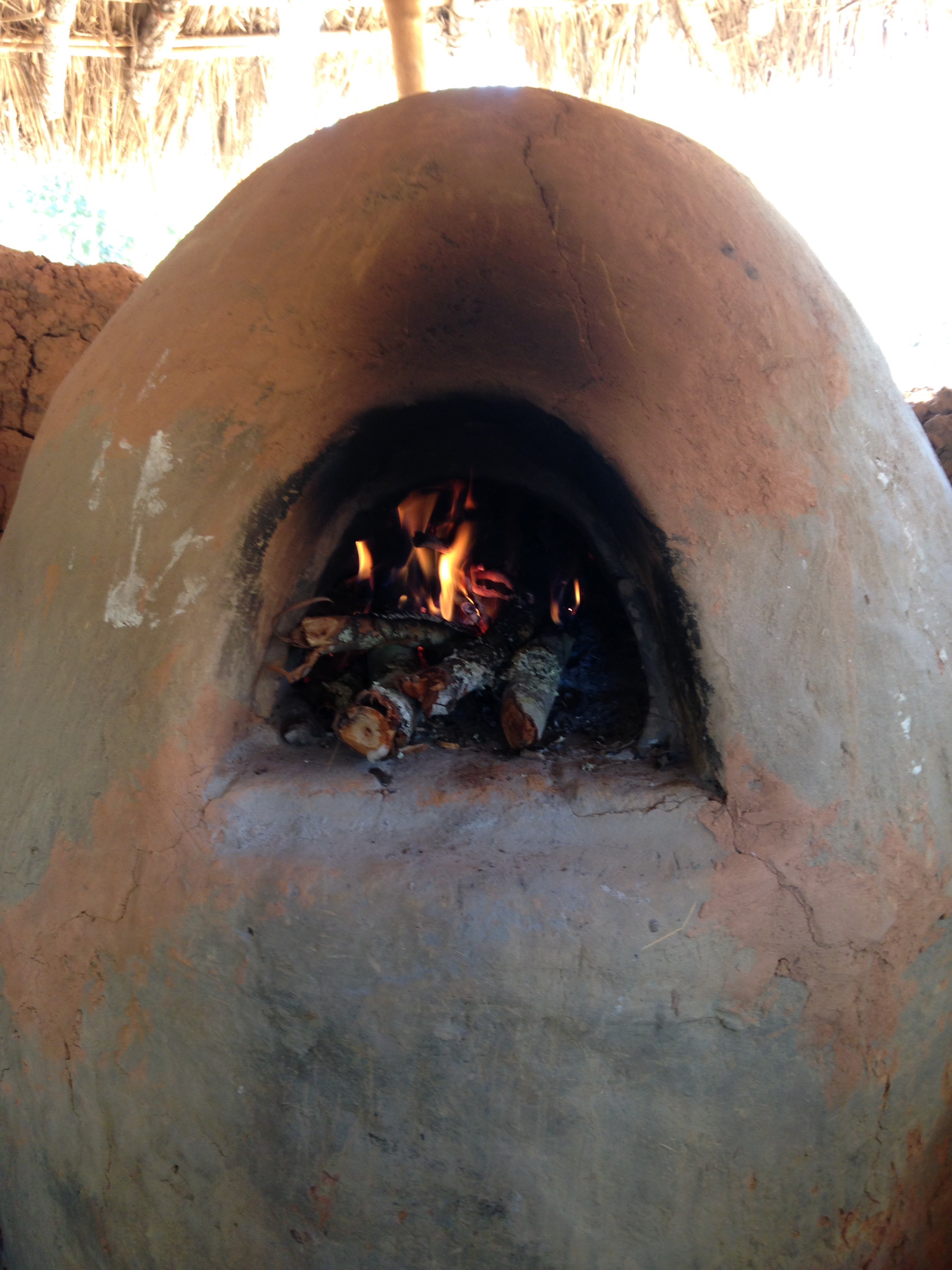
I am once again very lucky to have another great host family. I am staying with the Chitambo family. My host father and mother are both in their early 60’s and have eleven living children. Some of them have their families and are live on the compound as well. It seems like no matter where I go I’m distended to always be around large families. Unlike the host families during training the new hosts do not get a stipend from Peace Corps for hosting volunteers. The families are only required to provide volunteers a house and it’s the villages responsible to do upkeep on the house. Anything else the family does is extra, and mine do a lot. My family heats me up bath water every night that I use in the shower the previous volunteer built (no bucket baths yay). I eat dinner with my family most nights. Also, my firewood pile and water buckets are never empty. It’s like magic, whenever they get low the next thing you know they’re filled up again. Which I’m really grateful for, I’m more than happy not to walk to the nearest stream to get my water. Sometimes the little girls will come over and help me with dishes and sweep out my cooking shelter. I am getting better cooking over a wood fire. Starting the fire itself is another issue. Oftentimes the little kids will come over and help me with the fire, which really puts my self esteem in check.

To easy my fire starting, I have gathered dead grass to use as kindle, I put it in a large bag and hung it in my insaka (cooking shelter). On occasion I have gone out to see two of the families goats suspicious standing guard at the insaka entrance, while another was trying to stretch its neck up to get the grass filled bag. They were not hard to spook off, I just stuck my head out of my house door yelled “hey” and the all jumped in the air, then traded dirt for a while and scurried off. I have also seen the families cat lazily crawl out of the bag after using it as a bed. The other day I oddly found a single egg inside the bag.

My host parents work very hard. Right now they are in the middle of bean and soya harvest. It is unbelievable amount of work they have to do. Everything is done by hand to get the beans and soya from the field then un-pod them one by one and clean them to put in a bag to sell. My host father also has shown me around the community and helped me find meetings for me to attend. He also goes with me to these meetings. He is very involved with the community. You would never guess he was in his 60’s he is so active. I was talking to him the other day about how he is always busy, he told he cares a great amount about bringing development to the community. Which makes him the perfect counterpart.

Like training I have my own house separate from the families. It’s made out of mud bricks and a thatched roof. The roof has black plastic tarp nailed to the inside, not to keep out the rain (the thatch should do that) but to help keep out the dirt. My new house is much bigger than the little hut I had during training and even has some furnishings graciously left to me by the previous volunteer. I am currently in the process of cementing the brick walls so they’ll be nice and smooth for me to paint designs on. The floor is even cemented which is an upgrade from the clay floor I had in training, it helps keep out the termites.

The only complaint I have about my house is my ongoing war with spiders. I have found myself walking around the outside and inside my house holding a can of DOOM (insect killer) with my finger on the trigger ready to spray. I have started to like the smell of the chemical spray, which I don’t think is the best sign.

On one of these spider scouting trips I noticed in a small gap between the roofs plastic tarp and the wall, there was a large spider nestled in there. The spider was near to were I hang my mosquito net, so I was not having it. I pointed my can of Doom and unloaded on the monster spider. After, I peered in the gap, as I seen the spider slowly shriveling up I breathed in the sweet chemical smell of victory. Later that day I went to check that the spider was still dead, because apparently I’m paranoid about spiders. To my horror there was no shriveled spider in the gap at all! I tried not to freak out; maybe the spider fell, maybe it crawled away to have a dignified death, maybe it’s plotting revenge against me, maybe I have inhaled too many chemicals, who knows. A little while later I was walking by my bed and looked over and that bastard was just chilling on top of my mosquito net. So I did what any rational person would do. I grabbed my box of matches and went outside. After I stuck a match I said “hasta la vista el spider” the set my thatched roof on fire.

Joking, I got a broom swept the spider off my net, then stomped the sh#t out of it. Victory at last!

Next post I’ll talk about what my village is like and the projects I hope on doing while here, besides murdering spiders.

Finally a Volunteer

So I am officially a Peace Corps volunteer! The last couple weeks of training were pretty much like finals week. Cramming for the exams.  Then on our last day in the training village we threw our host families a party. The Peace Corps calls it Cultural Day because we cook American style dishes for the families.

The final language test was pretty nerve-racking especially because I had a case of Mr. D the day before and the day of the test. It is an oral exam where you have a conversation for about 40 minutes with the tester, it is recorded and multiple testers listen to your conversation and rate you. We had a practice exam the week before and I got a passing score of intermediate mid. The tester did tell me, that during my final I need to make sure I am speaking clearly because if the recorder doesn’t pick my voice up I’ll have to take the test again and “it will cause me much stress”.  It is good to find out that I cannot speak clearly in any language, it is important to be consistent in life.

The day of the language test I had three goals 1. To not poop myself because of Mr. D 2. To speak clearly 3. To pass the exam. I’m very happy to announce I accomplished all of my goals! We also had test over fish farming, safety and security, bike maintenance, and medical.  Even though there were a couple people who did not pass the language portion of the test they still are letting everyone get posted to site. Which was really exciting to hear that we all get to go through the posting process together.

Culture Day was really fun. We got dressed up and did a little performance for our host families. All the host families got dressed to the nines too, it was really fun to see. Then we exchanged gifts, as the host families gave us our gifts they sang for us. Which was very sweet and emotional.

After the performance we served the families food. Everyone had a station. Condiments aren’t really a thing here, so we eventually had to put someone on the condiment station after seeing Zambians put mustard on their mashed potatoes.

It was really hard to say goodbye to my host family but I was one of the luck few whose host families were picked to come to swear-in.

After Cultural Day we were taken back to the same motel we stayed at when we first flew into Zambia. After a day of sessions we were ready to be sworn in the next morning. The morning of swear-

in Peace Corps still did not get the memo on when I like to wake up. Even though the ceremony didn’t start until 10 they decided to have another session before swear in. We had to be at the Peace Corps office by 6:30 which meant we had to be all ready to go by 6.

For swear in everyone had outfits made out of chitenge, a traditional fabric. Everyone looked great in their bright outfits. At the swear in, we had Zambian government officials, the Chiefs from the two different training areas, plus the US ambassador. Straight after the ceremony we were taken to a mall in Lusaka and given about an hour and a half to shop for items that are harder to find outside the capital. It was really rushed especially because after we are posted we have community entry and are not allowed to leave our district for three months.

Now I’m sitting in the Central Provincial house waiting to be posted. Every province that Peace Corps is located in has its own provincial house. It’s a place to hangout, have wifi, do research, and have providential meetings. I am a little nervous to be posted and to be without any fellow Americans. Hopefully community entry goes well and I can integrate into the community.